Published on January 14, 2025 by Agencies for Kenya Online News
Last Updated on 2 years by Agencies for Kenya Online News
Kenya has completely run out of essential medical supplies—including condoms, HIV medicines, testing kits, and vaccines—putting millions of lives at risk in what health officials are calling an unprecedented crisis.
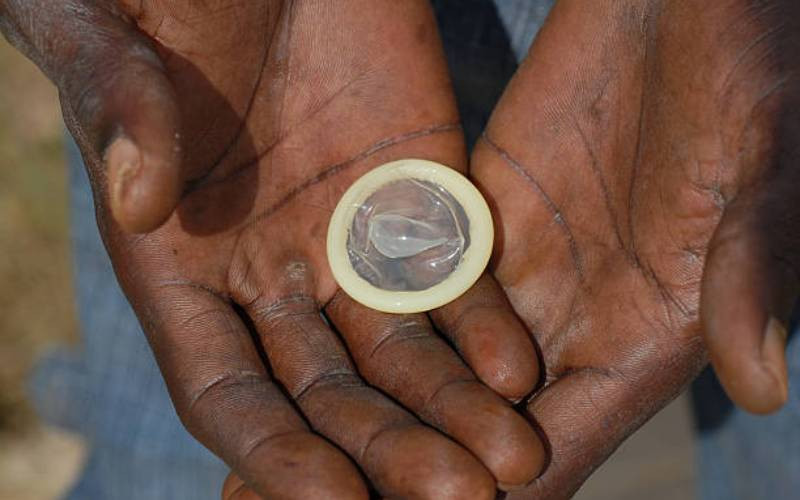
The Kenya Medical Supplies Authority (KEMSA) has yet to deliver 31 million condoms. At the same time, another 93.6 million pieces promised by the Global Fund remain undelivered. The last 7.2 million condoms in stock were distributed during the Christmas period.
“The product is stocked out at Kemsa because the supplier had challenges delivering the product as per the contract, which affected the consistency in availability at health facility level,” Dr Rose Nafula, head of the National AIDS and STIs Control Programme said, stating that new HIV testing kits are expected in February.
The country’s public and private hospitals are facing severe shortages of Atazanavir, a crucial HIV drug, as well as condoms, BCG vaccines for newborns, and most HIV-testing equipment after depleting stocks during the Christmas period.
“We currently have 1.378 million people living with HIV in Kenya,” said Dr Ruth Laibon-Masha, CEO of the National Syndemic Diseases Council. “Without consistent access to these medications, we risk undoing years of progress in fighting the epidemic.”
The shortage of HIV medicines comes at a critical time, with Kenya recording 16,752 new HIV infections in 2024— 10,784 in women and 5,968 in men. The country also reported 20,480 Aids-related deaths last year, including 2,607 children. This means that other Kenyans who are HIV-free, especially discordant couples, are at risk of contracting the virus.
As it stands, 97 per cent of people living with the disease in the government database are on antiretroviral therapy (ART) while 94 per cent are virally suppressed, which means lack of the drugs will immensely undo these strides.
The country has run out of Trinscreen, One-Step and First Response HIV test kits, and is currently only running on Standard Q test kits that are fast running out.
The crisis extends beyond HIV supplies. Medical Services Principal Secretary Harry Kimtai confirmed that BCG vaccines, which protect newborns against tuberculosis, are out of stock nationwide. While 2.6 million doses are expected by late this month, many infants born in the last six months remain unvaccinated.
“There has been a global challenge in contracting for procurement of traditional vaccines that includes BCG vaccines, which has since been resolved. We are expecting the BCG vaccines anytime from the third week of January 2025. In the meantime, we request caregivers to take the other vaccines as we wait for the resumption of BCG vaccines, Mr Kimtai said in an interview.
The crisis particularly affects refugee camps. The International Rescue Committee reported that the Kakuma camp has depleted its buffer stocks for several essential vaccines, while Hagdera in Dadaab has only 60 doses of oral polio vaccine remaining.
Adding to the crisis, nearly 90 per cent of healthcare facilities across the country are struggling to function. A recent survey by the Rural & Urban Private Hospitals Association of Kenya found that 89 per cent of facilities cannot cover operational costs, while 87 per cent are struggling to meet payroll expenses.
The situation has roots in deeper systemic issues. Last year, over one million condoms, 908,000 mosquito nets, and tuberculosis drugs worth Sh10 million disappeared from Kenya Medical Supplies Authority (Kemsa) warehouses, highlighting ongoing management challenges.
“Kemsa has poor internal controls on warehousing and inventory management, resulting in 16 per cent differences in batch numbers verified and discrepancies of 908,000 long-lasting insecticidal nets (LLINs) between actual and expected stock balances,” a Global Fund report highlighted.
“Kemsa’s Nairobi warehouse was overcrowded with commodities during our visit, making it difficult to trace commodities,” the report further stated, adding that their 2024 audit found that the agency over-quoted the value of medicines by Sh640 million ($5.6m), with some types of drugs having been inflated 100 times over.
Kemsa has yet to deliver 31 million condoms. At the same time, another 93.6 million pieces promised by the Global Fund remain undelivered. The last 7.2 million condoms in stock were distributed during the Christmas period.
“The product is stocked out at Kemsa because the supplier had challenges delivering the product as per the contract, which affected the consistency in availability at health facility level,” Dr Rose Nafula, head of the National AIDS and STIs Control Programme said, stating that new HIV testing kits are expected in February.
Following the shortage of HIV drugs, the Health ministry has issued guidelines to healthcare facilities to ensure the optimal use of what is available.
“We are instructing immediate transition of eligible patients to other appropriate regimens,” said Director-General Patrick Amoth in a January 2 circular.
“A committee of experts from NASCOP, KEMSA, county governments, HIV implementing partners, technical experts from universities and community representatives reviewed the current HIV data from research and commodity situation to inform the following guidance for adults and adolescents on ATVr 300/100mg with immediate effect targeted for phase 3 (Optimization of adults living with HIV on 2nd line ATV/r to dolutegravir (DTG) based regimens,” reads the circular signed by Dr Amoth.
For a country that serves as a regional healthcare hub and has been celebrated for its HIV/AIDS response, the current shortages threaten to reverse decades of progress.
The government promises relief is coming, with various medical supplies expected to arrive by February. However, for thousands of patients dependent on daily medication and new mothers seeking vaccines for their infants, these assurances offer little immediate comfort.