Published on July 4, 2025 by Agencies for Kenya Online News
Last Updated on 1 year by Agencies for Kenya Online News

By Peter Odhengo – Program Coordinator FLLoCA
Kenya’s climate policies are taking the much-needed turn toward inclusion. The recently launched National Gender and Climate Change Action Plan (2024–2027) acknowledges what many development practitioners have long known: that women, youth, and marginalized communities are not only disproportionately affected by climate change—they are also essential to effective and sustainable climate solutions.
While national frameworks set an important foundation, the true measure of progress lies in
the implementation-and that must align, quite literally from the grassroots.
County governments, often viewed as secondary players in climate planning, are the first line of defense against the climate crisis. It is in counties that rainfall patterns are tracked, water sources managed, crops grown, and communities mobilized. This is also where gender disparities are most visible—in access to resources, participation in decision-making, and exposure to climate risks. If Kenya’s gender-responsive climate policies are to succeed, they must be rooted in the lived realities of women and girls at the county level.
The Financing Locally Led Climate Action (FLLoCA) program offers a model of how this can be done. Backed by the Government of Kenya and international development partners, FLLoCA is one of the few nationally supported initiatives that explicitly integrates gender inclusion into local climate programming. The Program provides funding directly to counties to design and implement climate resilience projects, with community participation and social inclusion hardwired into its operations.
Under the FLLoCA Program, County Climate Change Units (CCUs) are mandated to conduct inclusive consultations, ensuring that women’s voices are meaningfully integrated into planning and decision-making processes. Gender and social inclusion considerations are embedded across the program implementation—from project selection and monitoring frameworks to capacity-building efforts.
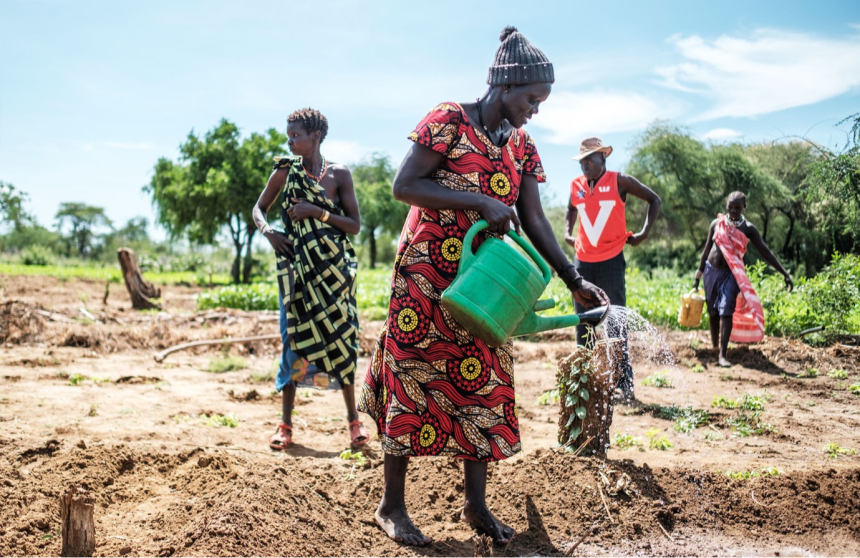
In Kisii County, for example, women-led cooperatives have been supported to establish climate-smart agribusinesses, enhancing food security, boosting household incomes, and strengthening resilience. In Isiolo County, water management systems were redesigned with a focus on women’s safety and accessibility, recognizing their traditional role in water collection and resource stewardship.
These are not isolated success stories. They illustrate a broader truth: that climate solutions designed with, and not just for, women are more durable, equitable, and impactful. Numerous studies, including from UN Women and the Global Commission on Adaptation, have shown that when women participate fully in climate governance, outcomes improve across the board, from natural resource conservation to household adaptation and disaster response.
Despite this, national climate budgeting and policy frameworks still treat gender as an afterthought or a tick-box exercise. The challenge is twofold. First, gender strategies are often designed at the national level without sufficient understanding of the diverse local contexts across Kenya’s 47 counties. Second, the funding mechanisms that support climate action rarely prioritize or track gender-disaggregated outcomes.
What is needed is a deliberate shift to embed gender-responsive planning into everymstage of climate policy, starting where the impact is most immediate. Counties must be given the tools, resources, and incentives to develop locally tailored gender strategies, aligned with national goals but responsive to local dynamics. This includes training county officials on gender analysis, supporting women-led climate enterprises, and ensuring that local climate finance mechanisms like FLLoCA maintain and expand their inclusion mandates.
The National Gender and Climate Change Action Plan is a step in the right direction. It outlines goals such as increasing women’s participation in climate-related decision- making, improving their access to climate finance, and promoting gender-sensitive early warning systems. But these ambitions will remain aspirational unless they are backed by operational frameworks and budget lines that empower counties to act.
Devolution gives Kenya a unique advantage in this regard. Unlike many countries, Kenya’s Constitution already mandates gender equity in public appointments and devolved service delivery. The institutional scaffolding exists; what’s required now is the political will and fiscal commitment to make it real.
Moreover, investing in gender-responsive local climate action is not just a matter of equity—it is a smart economic strategy. According to the African Development Bank, closing gender gaps in agriculture alone could increase productivity by up to 30% and reduce hunger for millions. Women’s roles as farmers, caregivers, and community leaders position them at the nexus of climate vulnerability and opportunity.
To unlock this potential, national climate planning must embrace counties both as implementers and as co-creators of Kenya’s climate future. The state must go beyond rhetoric and align its climate finance architecture to reward inclusive governance. This includes ensuring that the Climate Change Fund and other national funding streams prioritize county proposals that demonstrate gender mainstreaming and social inclusion.
Kenya’s path to climate resilience will not be paved solely by solar panels and carbon credits. It will be built in part by rural women managing water points, youth groups planting trees, and local leaders making space for new voices in old systems. The opportunity is clear: to translate a strong national vision into transformative local action. For gender-responsive climate policy to be more than a promise, it must begin where climate change hits hardest and where people are already acting with courage and clarity. At the county level.