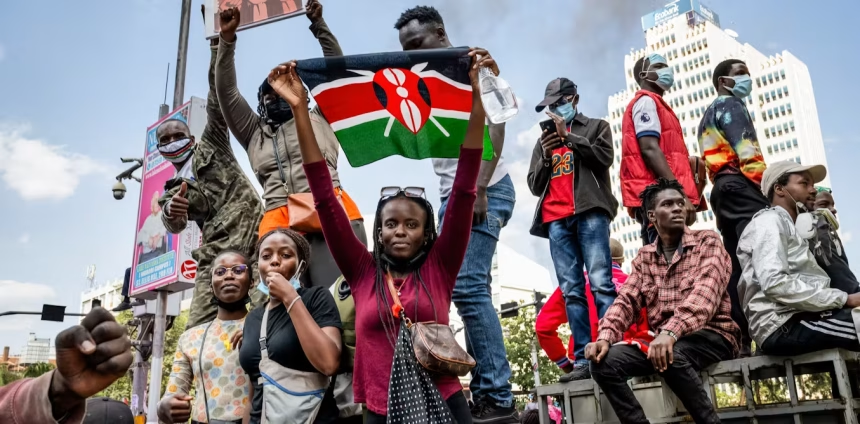
In June 2024, young Kenyan activists voiced their frustrations against systemic corruption, rampant unemployment, and perceived government failures. What began as a peaceful expression of discontent quickly escalated into a nationwide crisis, fueled by deep-seated anger and despair among the youth.
How It All Started
Initially sparked by online protests that went viral, the demonstrations gained momentum following the controversial passage of the 2024 Finance Bill by Parliament. Transitioning from digital activism to the streets, thousands gathered to demand change.
What began as a well-organized civil rights movement soon devolved into chaos. The protests drew diverse crowds, including young women who would ordinarily opt for leisure activities, highlighting the widespread discontent.
Tragically, the situation turned deadly. Among the casualties was Rex Kanyike Masai, whose name has become a rallying cry after he succumbed to gunshot wounds while protesting in central Nairobi. Reports indicate that over 60 people lost their lives, with hundreds more injured and properties destroyed.
Activists accused law enforcement of excessive force, extrajudicial killings, and abductions. The government, however, denied responsibility, instead attributing the violence to a shadowy third-party group known as the “Goon Zees.” This standoff between the government and the activists left ordinary Kenyans to suffer the consequences—a situation encapsulated by the Swahili saying, *”Wapiganapo fahali wawili, ni nyasi humia” (When two bulls fight, it is the grass that suffers).*
Escalation and Consequences
The aftermath of the protests was marked by fear, violence, and uncertainty. Members of Parliament and government officials who supported the Finance Bill faced direct threats and attacks. Some were beaten, their properties torched, and their families displaced.
One notable case was that of Winnierose Wangui, a public officer in Laikipia County. Her home, once a sanctuary of cherished memories, was reduced to ashes by an enraged mob. Forced to seek refuge with friends, she discovered that nowhere was safe as long as her identity was known.
Threatening messages flooded her inbox, accusing her of complicity in government failures and demanding her departure from Laikipia—or worse. For Winnierose and others like her, staying in Kenya felt like signing a death warrant. Many government officials now contemplate seeking asylum abroad, haunted by the fear of relentless persecution.
The Road Ahead: Victims and Casualties
As economic hardships persist and no meaningful changes or reparations for victims emerge, many young people have taken to social media to express that their fight is far from over.
The potential for further unrest looms large. Memories of the protests, reminiscent of Kenya’s pre- and post-election crises, remain vivid. With justice and accountability elusive, the youth’s call for systemic change grows louder, signaling that Kenya’s struggle for transformation is far from complete.
The question is not if the country will face another wave of activism, but rather when it will erupt—and whether Kenya is prepared to listen, respond, and heal.